
Operation Counterstrike
How to make the best of it when you get everything you bargained for and more

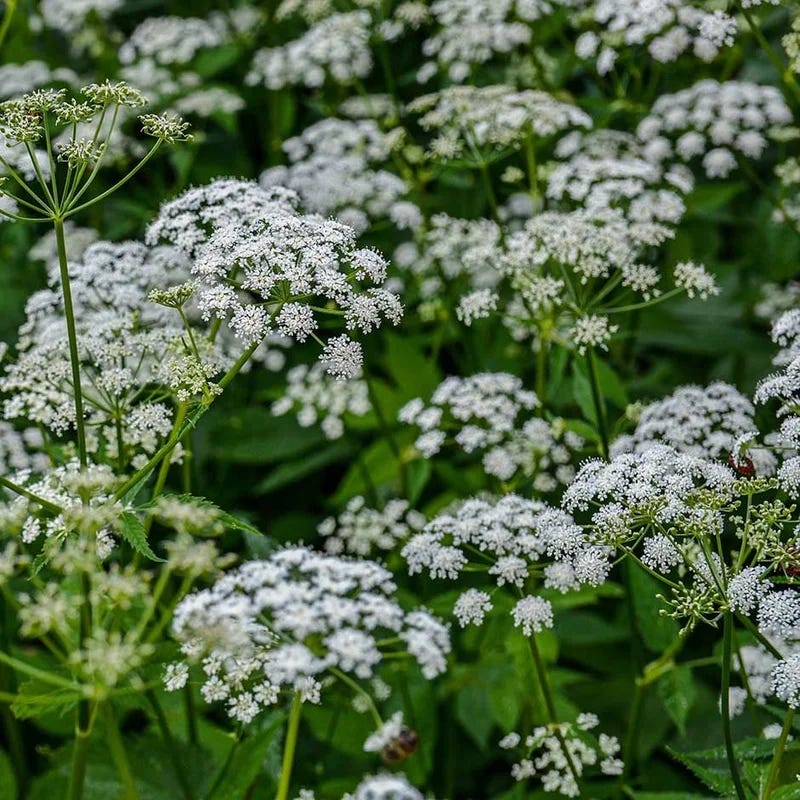
I am going through a bloody and violent war. Although mostly the blood is mine and to be honest, so is the violence. I’m facing a full-scale epidemic of ground elder (Aegopodium podagraria). I have never had a garden with this particular weed before. In other gardens I’ve suffered through bindweed (Calystigia sepium) and horsetail (Equisetum arvense) but they are mere trifling annoyances compared to this devious foe.
I could easily write a thousand-word Herman Melville-style rant about my battles with ground elder, there are many parallels, not least my pulling it out of the ground while shouting “Dick” (homage to Moby, of course), but I think I might bore you to tears. Suffice it to say that after years of begging my husband to move to the country, and for a bigger garden, that garden is proving to be a challenge beyond anything I had anticipated.
I had many fantasies about what to do with the front garden when we moved. I was in ecstasies over recreating Piet Oudolf’s garden at Hauser & Wirth, or else a Tom Stuart-Smith inspired herbaceous creation. I drew and re-drew beautiful pictures and wrote plant lists. I even persuaded my long-suffering husband to agree a budget.
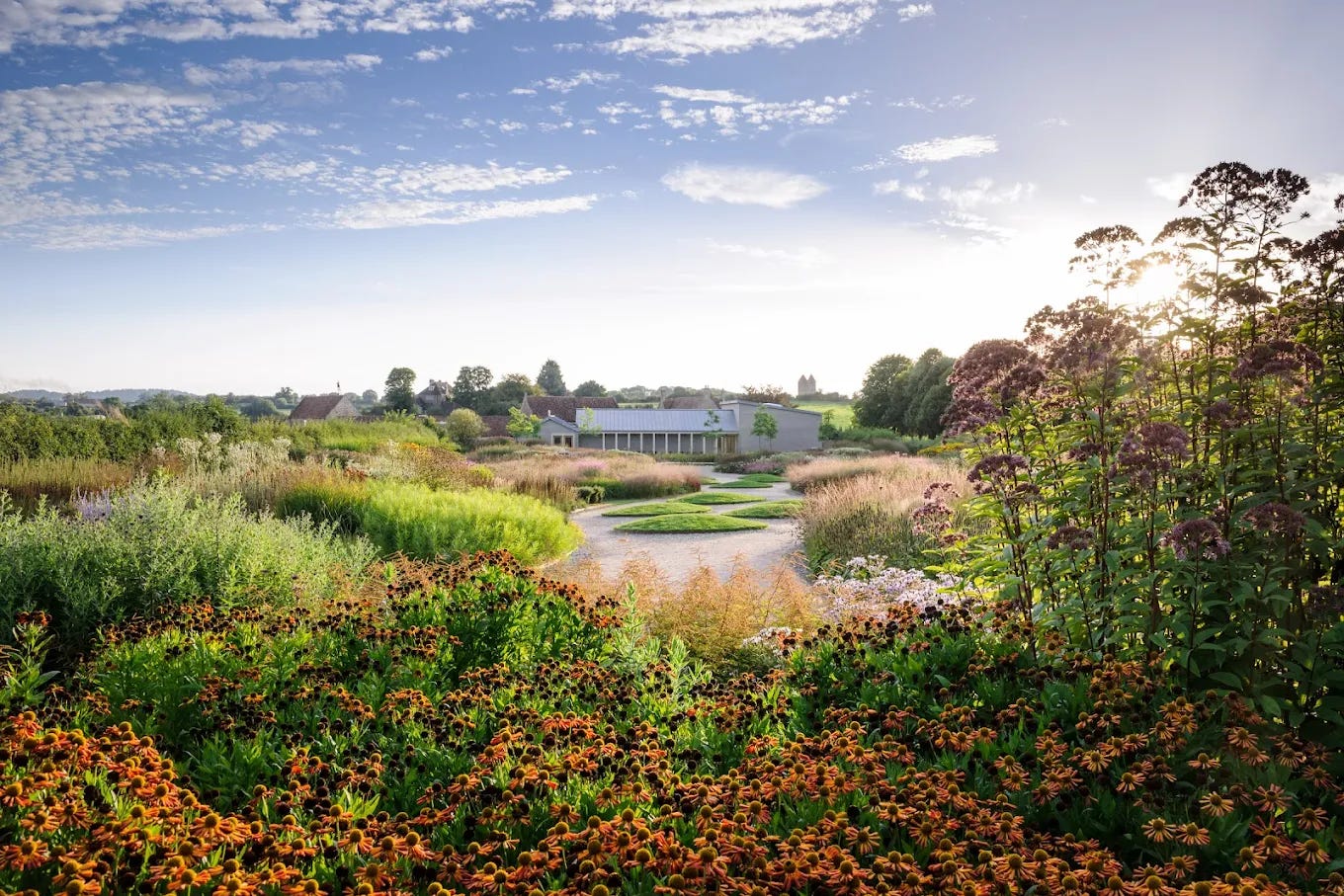
I pictured the National Garden Scheme popping by with a gold-plated invitation for me to open my garden to the public. I practiced my demure acceptance (“Oh gosh, how flattering! Well if you really think it’s good enough, I’ve never thought about it”).
Listen, I am a gardener, I’ve been trained and everything. I thought I understood how long it takes to change a garden, how difficult it can be to maintain a large space alone. But, somehow I thought mine would be different, I could dedicate all my spare hours and do it entirely by myself. That I could create a masterpiece.
And then reality bit like a rabid dog.
The Big Border is my nemesis. It is in the front garden and is at least fifteen metres long and was originally planted at least twenty years ago with a mixture of cottage garden plants but has been neglected and thugs – Crocosmia lucifer, Lamium purpureum Red Dead-nettle, and Rosa rubiginosa have taken over. But most of all it is host to epic amounts of ground elder which has colonised the bed with military precision.
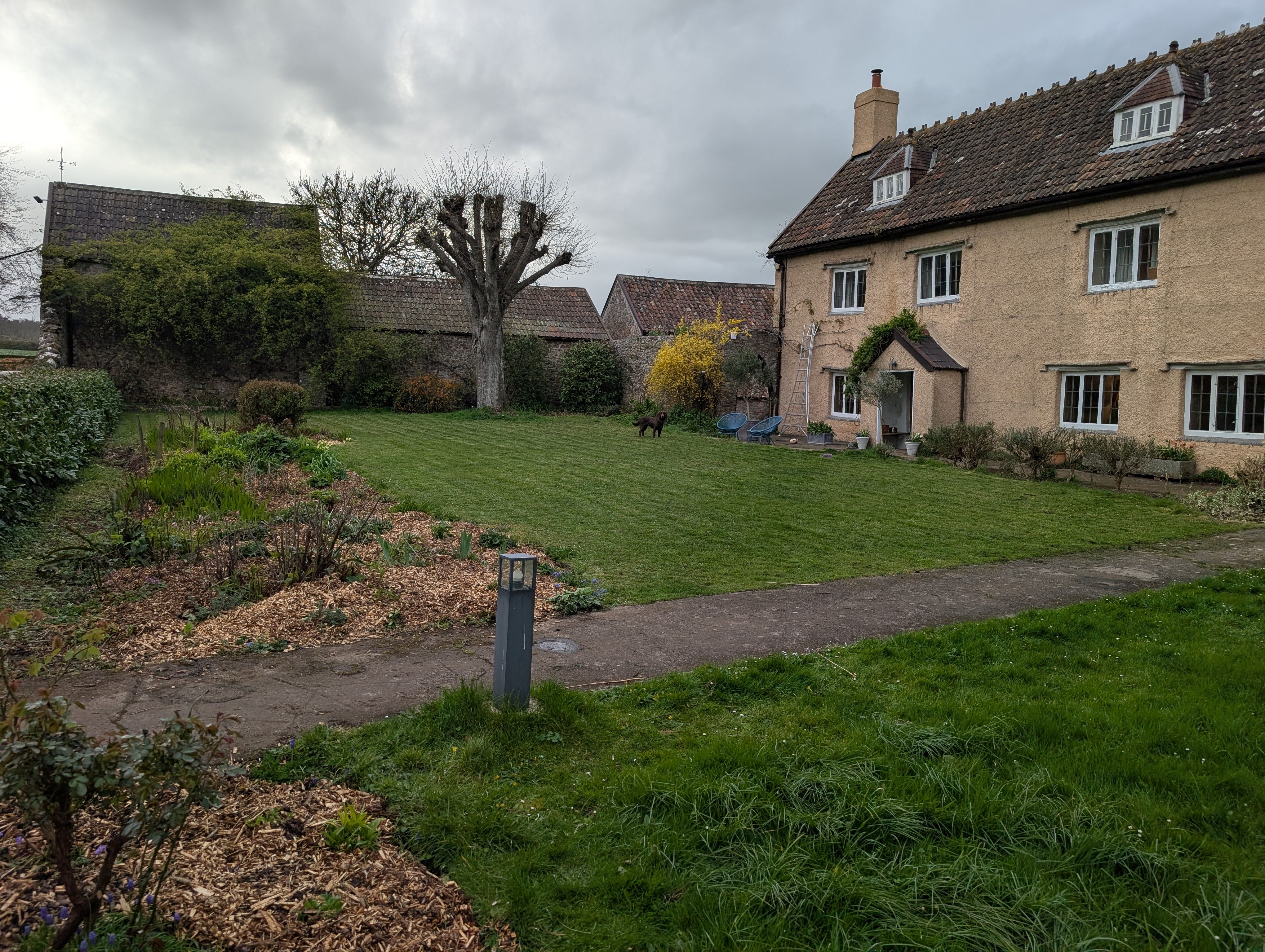
The Big Border is resisting all my attempts at ground elder eradication. I’ve made all the mistakes – tried to dig it out which just made it spread like glitter after Glastonbury. I’ve contemplated digging the whole garden out and razing it but if just one scrap remains I’ll be back to square one.
But no more. Operation Counterstrike is turning the tables on the vicious weed. I am going to outsmart it at its own game. I have lightly hoed it to weaken it, laid down thick layers of mulch and now I’m going to out-thug it with some judicious planting of my own.
My rugby front row looks like this


Anemone hupensis ‘Hadspen Abundance’
Artemesia ludoviciana ‘Silver Queen’
Bistorta amplexicaulils ‘Firetail’


Monarda didyma x fistulosa ‘Oneida’
Hylotelephium Matrona
Euphorbia characias subsp. Wulfenii
Nepeta ‘Weinheim Summer Blues’
I’m comforted by Henk Gerritsen and Piet Oudolf’s words in ‘Dream Plants for the Natural Garden’:
“combating running weeds usually turns into a battle: in the case of ground elder, a battle that has to be pursued not just in spring, but in summer too, year in and year out”
It seems that I’m not alone in fighting the good fight.
I am little sad that I’m not able to start with a blank slate, but isn’t that the same with everyone’s gardens? We have to manage conditions, be it soil, climate, sun or space and deal with what is in front of us, not how we would like it to be. In fact, the glorious Beth Chatto turned struggles with her garden into a challenge and pioneered difficult gardening conditions. She established her world-famous gardens in one of the driest parts of the country. Instead of fighting the site, she worked with it, her philosophy of “right plant, right place” meant that no plant was left trying to battle its nature.
“We lost too many plants in our impatience to possess them, because we had not achieved the proper growing conditions.” Beth Chatto, The Beth Chatto Handbook
I’ve mentally rolled up my sleeves and I’m going in, a combination of year-round weeding and tough planting should keep the weeds down if not out. ‘Dream Plants’ has one final piece of advice for me:
“Let me throw a few words of comfort in your direction: ‘One must suffer for art’. There is nothing else to be said. And just imagine if everything were straightforward and you had nothing to do at all any more. Why it doesn’t bear thinking about.”
It doesn’t bear thinking about at all.
Relatable. No one warned me when I rented my big, country garden how much time I would spend policing weeds. ALL the weeds. So many weeds. But I have come to enjoy it. Weeding with a hori hori when in a bad mood is excellent therapy.
I was a child laborer every spring, with the job of finding and following the root threads of ground elder to pull out as long sections as I could. The end goal being to rid my mum's flower bed of the curse for that summer. Being a thinker by nature, I actually loved that job! I could muse freely for hours while unearthing satisfyingly loooong strings of root. And it worked, the plant was kept at bay until autumn - then next spring it all started over again...