
Class Under Glass
Confessions of a gardening snob. And what Marie Antionette, The Newt and a ten-metre polytunnel taught me about taste.

It turns out that I’m a snob. Specifically, a gardening snob.
When we moved to our house, a little over a year ago, I inherited a long-neglected veg patch. There was a fruit cage full of weeds taller than me, a pair of gnarly apple trees and a quarter of an acre of grassed-over possibility. I knew that in previous decades it had produced wonderful vegetables: deep green beans, Schiaparelli pink rhubarb and courgettes by the tonne. Inspired by this I launched into designing the plot of my dreams.
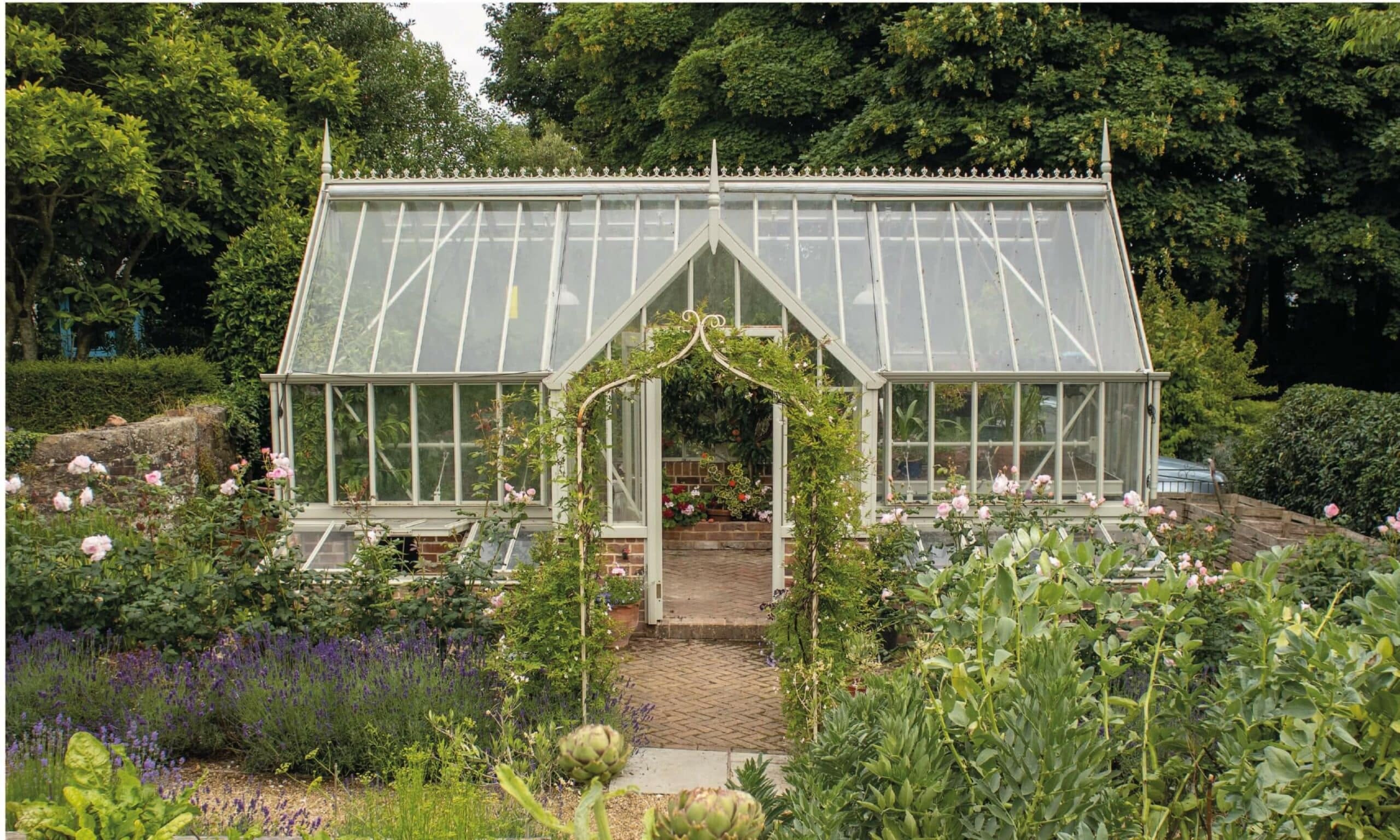
A greenhouse was the cornerstone of my design. I wanted it to be a jewel in the crown of my vegetable plot. I daydreamed about Victorian finials with sage-green metal work, terracotta tiles and rattan chairs. I imagined drifting around my beautiful space while wearing something floaty and carrying a wicker basket. I was utterly sucked in by Pinterest.
And then I priced it up. It seemed to have too many zeros and looked suspiciously like the annual budget for the NHS. Not a hope I could buy this instead of adding heating to the house. I was bereft.
I had been a victim of Insta Gardening.
Gardening in Britain has a history steeped in snobbery. The Humphry Repton style of rolling parklands at grand country houses and was based on cheap labour, abundant land and a need to impress. The graceful allées, sunlight slashed by trees, created a strobe effect as your carriage galloped past before you had even arrived. Everything was geared towards pomposity and intimidation.
I used to be a gardener in the Walled Garden at Stourhead, the famous Georgian gardens in Wiltshire. These weren’t created as a conventional veg patch – they were designed as a Show Garden. It had exotics such as pineapple pits, which were daringly new and eye-wateringly expensive. They required at least one gardener to be entirely devoted to growing them, even sleeping beside them.
And there were strawberry beds bred from plants newly brought from the Americas, which must have seemed like another planet. The Walled Garden was positioned near the house so the family could promenade with their guests - visiting this exquisite toy was about showcasing their fortune and class. The actual working gardens that fed the house were kept some distance away and probably smelt ripe, mulched with horse dung. Not somewhere to show off
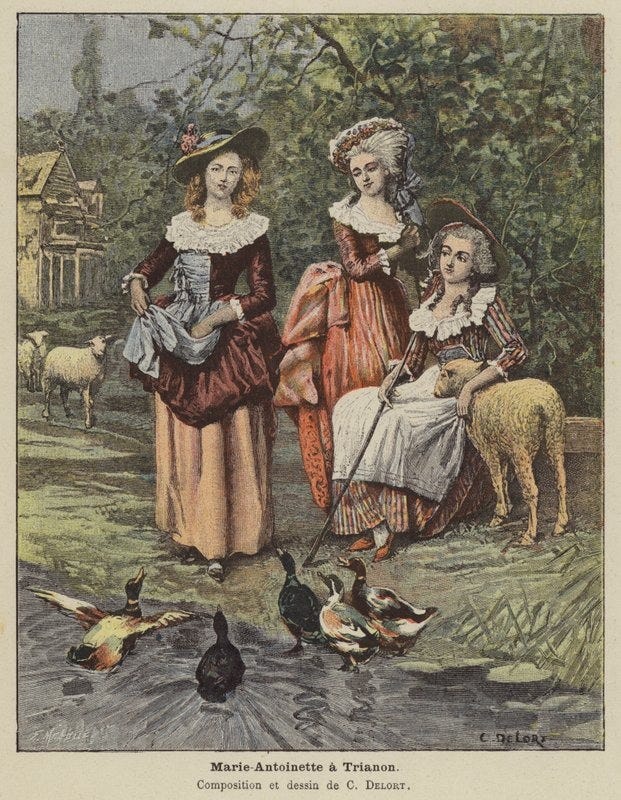
.The French, of course, took idealised gardening further. The ill-fated French queen Marie Antionette converted Le Petit Trianon into a picture-perfect farm, complete with beautifully washed cows and chickens. She would dress in a soft muslin gown and collect eggs (secretly polished by her servants) and have picnics. It was shockingly bold and subversive. And suddenly everyone at Court wanted to be part of this garden fantasy. Perhaps Marie Antionette was an early gardening influencer.
The lineage of a curated garden fantasy is still alive today. I was thinking about these taste-setters as I visited The Newt in Somerset last autumn. They have conjured up their own Trianon - manicured vegetable gardens are lined with neat rows of lettuces and elegant oak-framed fruit cages house blackcurrants and raspberries. The tunnel supporting the gourds looks like a Tate-worthy art-installation and the apple trees have been pruned into whimsical shapes.
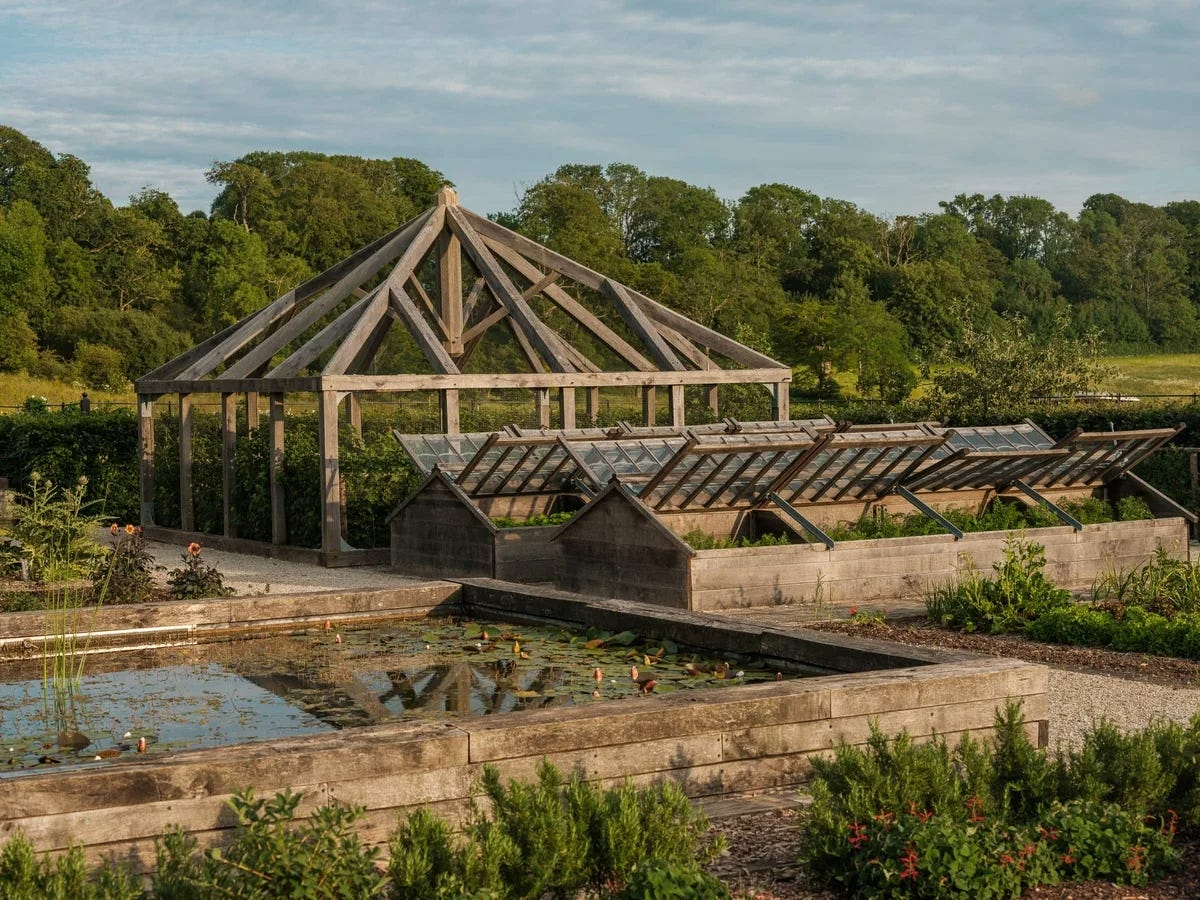
I was deeply impressed and deeply jealous. But then I realised, this isn’t reality. The vegetables for the restaurants are grown off-site, over many acres that aren’t open to the public. This is a fantasy for guests to enjoy, polished vegetable production for the Insta generation without a speck of mud out of place.
I began to question my motivation. Did I want a vegetable patch that was beautiful to visit, somewhere to smugly take my guests so I could wave my hand airily and saying, “Of course we love growing our own food” before sneaking off to the supermarket? Or did I really want to create something that maximised my energy but may be a bit scruffy around the edges?
I needed to look at what I really wanted from my garden and ignore the influencing.
It was thinking about this that encouraged me to take a deep breath, shake off my prejudice and create a useful space.
And I built a... polytunnel.
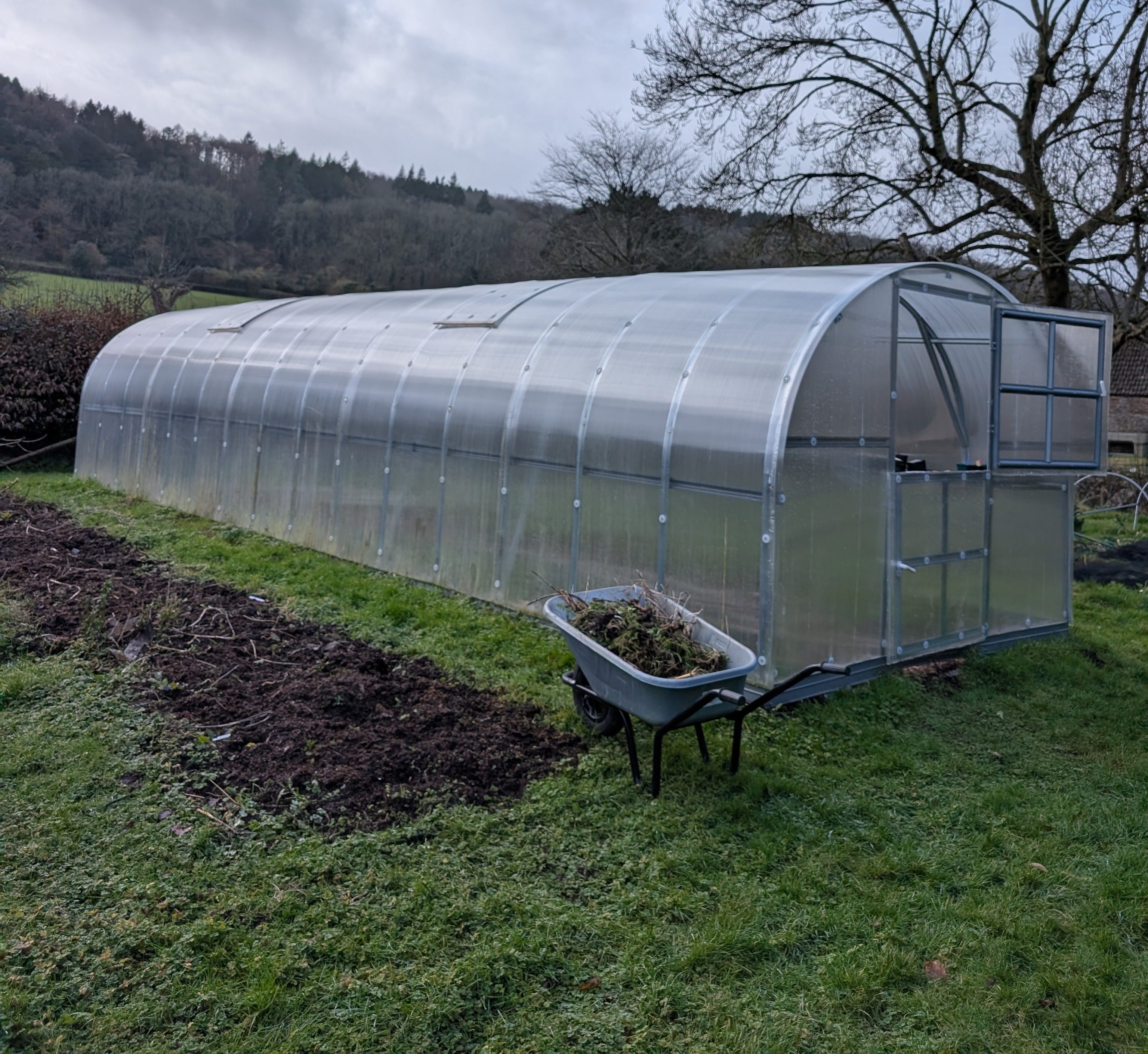
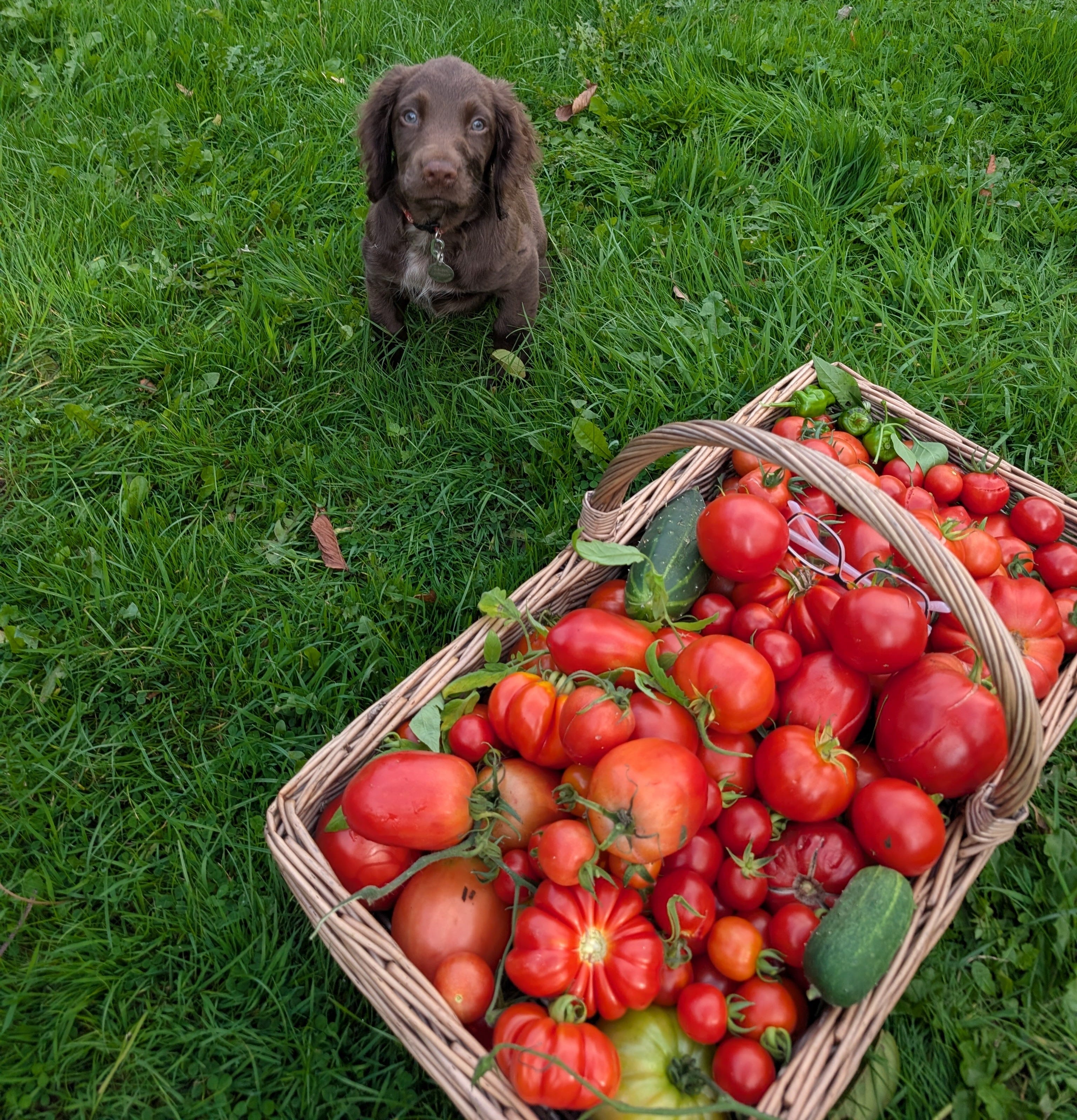
This thing is ugly. It’s enormous - ten metres long - and without a rattan chair in sight. It’s utilitarian and sits in the plot like boil on your face that erupts on the day of a party. But my god, is it practical. Last summer, I grew so many tomatoes that I made enough passata to see us into spring. I grew cucumbers, chillies, peppers and aubergines. I couldn’t keep up with the sheer amount of food it produced – harvesting became a daily job. And not one I could wear an impractical muslin gown for.
This autumn I have filled it with lettuce, rocket, kale and radishes. I have been picking and growing our own greens for the entire winter and won’t stop until the summer crops are ready to go back in.
Next summer, I’m toying with adding melons, fig trees and lemons, a small homage to my time at Stourhead. But this isn’t a Show Garden. It’s dirty, real and gloriously no-nonsense. And perhaps that’s the point: the magic isn’t in the fantasy, but in the food we actually grow. So maybe I am not a total snob after all - just a Garden Witch.
I think a weird alien pod might find a place into my garden sometime soon!
Not going to lie, I am *wildly* jealous of your polytunnel